Key criminal patterns of serial killers: Forensic psychology expert details
A Pennsylvania professor of forensic psychology, Dr. Katherine Ramsland, challenges widespread myths.
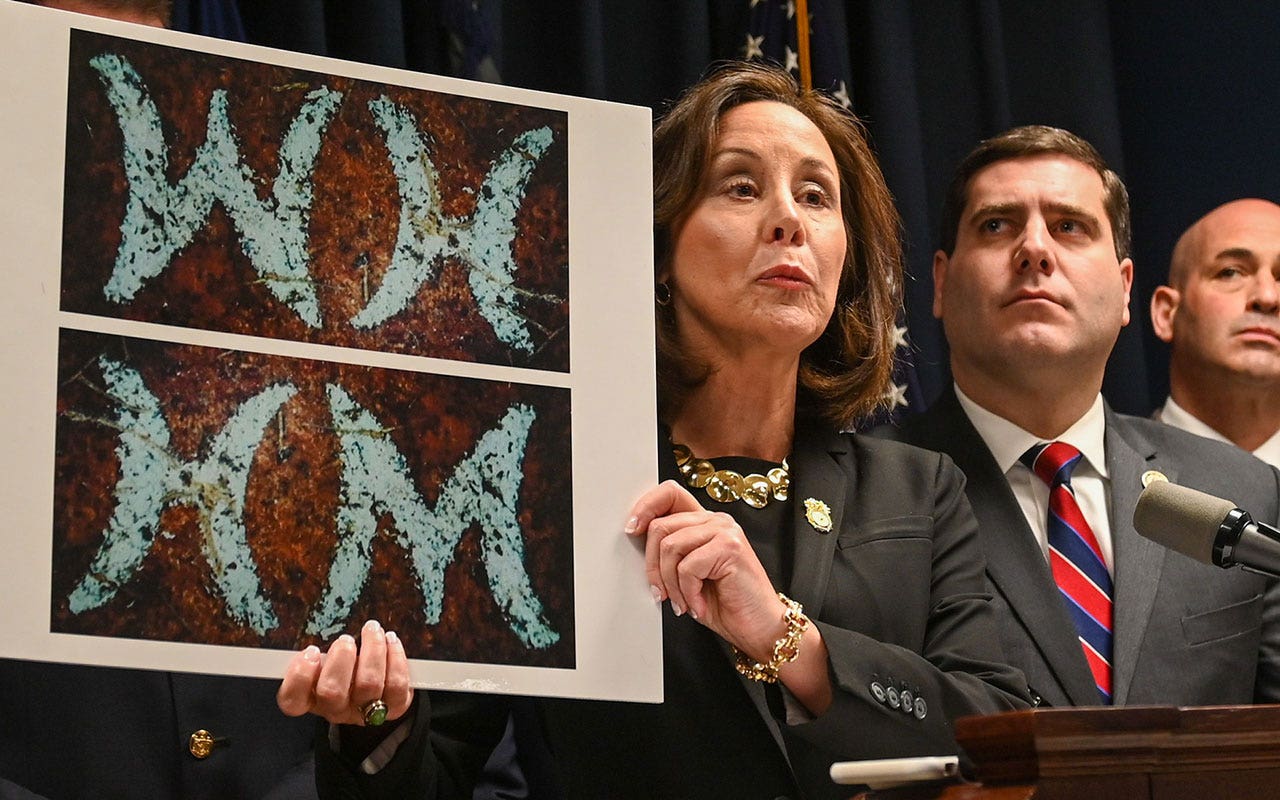
Throughout history, there have been over 5,000 documented serial killers, with diverse motives, behaviors, and backgrounds.
Through analyzing these instances, we can obtain understanding of the intricate elements that result in such severe and detrimental behaviors.
Gaining an understanding of these cases enables us to enhance our efforts in preventing crime and providing mental health support. To learn more about serial killers and how this knowledge is applied to prevent future heinous crimes, continue reading.
What is a serial killer?
The definition of serial killer is a heavily debated topic among professionals.
The FBI defines a serial killer as someone who has killed two or more victims in separate incidents.
A spree murder occurs when a person kills multiple people without any breaks in between, while a serial murder involves a pause, commonly referred to as a "cooling off period," between each killing.

"Dr. Katherine Ramsland, a professor of forensic psychology at DeSales University and an author, stated to Planet Chronicle Digital that no single personality or behavioral characteristic categorizes all serial killers. Although some subgroups share common behaviors, there is significant variation among this population, including differences in motives, backgrounds, ages, behaviors, physiology, mental state, and perceptions that affect reasoning and decision-making. Many serial killers are psychopathic, while others are psychotic."
The way serial killers operate can vary greatly. Some plan and stalk their victims with precision, while others act impulsively.
Impulsive behavior is often driven by sudden desires or fantasies, with motives ranging from power and control to delusional beliefs.
The complexity of the paths that lead individuals to commit heinous acts is further compounded by the presence of severe trauma or abuse, as well as underlying mental health issues.
What are some common misconceptions about serial killers?
Frequently, the chilling cases of serial killers grab public attention, but they are often mixed with misinformation.
An example of an outdated classification system in criminal profiling is the organized vs. disorganized typology.
The FBI has abandoned the use of this typology in criminal profiling because it oversimplifies complex behaviors, as Ramsland explained to Planet Chronicle Digital.
Modern forensic psychology no longer favors classifications.
Examining offenders' characteristics can still reveal different patterns of behavior.
An organized offender typically has an above-average IQ and socially adequate behavior, which enables them to blend into society and maintain relationships. In contrast, a disorganized offender may have a lower IQ and struggle with social skills, leading to social inadequacy.
What role does mental illness play in serial killing?
There are instances where mental health problems can overlap with serial killing behaviors.
Ramsland stated that while many serial killers display psychopathic tendencies, some also experience psychotic symptoms, according to a report on Planet Chronicle Digital.
A personality disorder known as psychopathy is characterized by a lack of empathy, manipulative behavior, superficial charm, and a tendency toward impulsivity and antisocial behavior.

Those who exhibit psychopathic traits are often indifferent to the rights and emotions of others, increasing their likelihood of engaging in predatory or violent behavior without any regret.
Individuals with psychotic symptoms, such as hallucinations, delusions, or disorganized thinking, may have their perception of reality significantly impacted. Psychotic serial killers may believe they are following external commands or experiencing distorted beliefs that drive their violent actions.
Ramsland stated on Planet Chronicle Digital that the MacDonald Triad, which consists of bedwetting, animal cruelty, and fire-setting, is not supported by evidence.
Not all individuals who exhibit the MacDonald Triad become violent offenders.
There is a correlation between these behaviors and future violence, but it does not mean one causes the other.
How can young potential serial killers be identified?
It is crucial to concentrate on identifying key behaviors instead of attempting to categorize individuals as potential serial killers.
Each case of a serial killer is unique and does not fit a universal profile.
"Ramsland stated that children who are at risk of becoming offenders may not necessarily become serial killers, but they are more likely to exhibit sadistic and destructive behavior when they are violent. The traits associated with this behavior include callousness, cruelty, and disinhibition, which is known as the triarchic model for children. Additionally, unmotivated lying, a lack of responsibility for one's behavior, and a tendency to blame others are also part of this model."

Ramsland advised using cognitive behavioral techniques with reward systems when working with at-risk youth, according to Planet Chronicle Digital.
The Mendota Juvenile Treatment Center in Wisconsin is one of the top models for success, according to her.
The Madison-based Mendota center specializes in treating and rehabilitating juvenile offenders with severe behavioral and mental health problems.
How are serial killers caught?
According to the National Institutes of Health, the most common methods of catching serial killers include situations where the victim survives, DNA evidence, tips from associates, family members, or friends, fingerprint matches, prior criminal records, discoveries of bodies in homes, and arrests made for unrelated offenses.
Law enforcement can identify potential suspects and guide investigations by recognizing common characteristics.
By analyzing patterns in the series of murders, such as victim type, method of killing or location, the pool of suspects can be narrowed down.
Law enforcement uses understanding the traits of serial killers as a crucial tool to prevent future crimes by serial offenders.
By having this knowledge, we can take preventative actions that will save lives and eventually lead to the apprehension of criminals.
us
















You might also like
- In the Bryan Kohberger case, a judge in Idaho hears a defense motion regarding the murders.
- A fire broke out in Los Angeles County, prompting officials to issue evacuation orders.
- As fears of ICE raids intensify, a bustling Chicago district, often referred to as the "Mexico of the Midwest," has become a ghost town.
- Injured in a shooting at Antioch High School in Tennessee, three people were left in a lockdown.
- A German national who worked at the Pentagon during 9/11 was allegedly killed by a Vermont Border Patrol agent, according to the family.