A key Democratic Senate candidate who accused their opponent of election denialism has a history of questioning election results.
Texas Rep. Colin Allred frequently raised doubts about the validity of future election outcomes.
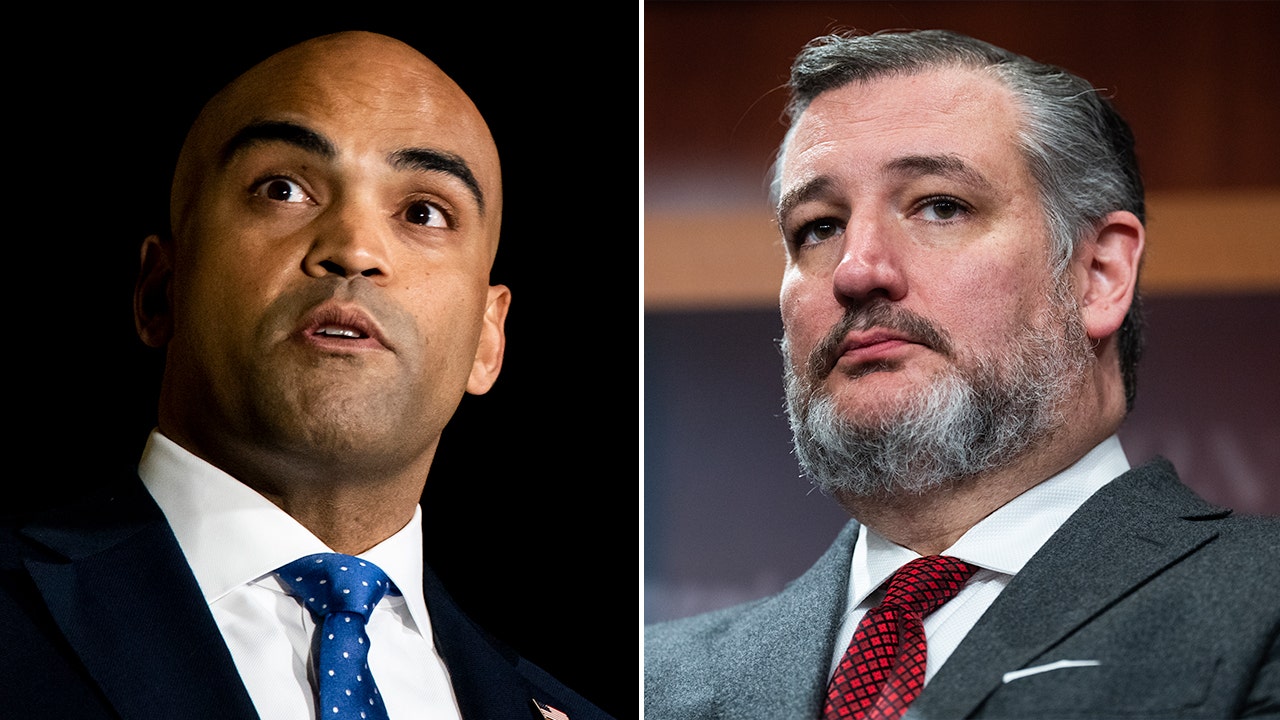
The Democrat in a top Senate race this year accused his opponent of election denialism, but also has a history of questioning the legitimacy of the vote.
In the Senate race in Texas, Sen. Ted Cruz has been criticized by Rep. Colin Allred for not directly stating whether he would accept the results of the upcoming election, despite Allred's own past statements suggesting that future election outcomes may need to be questioned.
"Ted Cruz sees questions about our democracy as a cynical partisan game. Our democracy is not a game; it's the foundation of our identity as Americans. Cruz is a threat to our liberties and values. We must vote him out in November," Allred wrote on X, following an interview with Cruz on CNN where he argued with a host about accepting the election results.

During the interview, Cruz challenged the host's assertion that there was no voter fraud in the 2020 election. He argued that the laws allowing for results to be challenged on the basis of fraud were necessary, and questioned why the media never asked Democrats if they would accept election results.
In an August 2019 town hall in Garland, Texas, Allred warned of election fraud in the 2020 election, specifically citing Russian interference in the 2016 election, as reported in the Mueller report and the hacking of election databases. He also advocated for "paper trails" on electronic voting machines.
The Mueller report may have influenced our perception of foreign interference in elections, and this has raised concerns about the legitimacy of our next election, according to Allred, who made these remarks on a local radio show in September 2019.

A month later, he expressed his concerns to a meeting of the Richardson Area Democrats, stating that he was troubled by the possibility that the next election might not be legitimate, as then-President Trump may attempt to use foreign influence to boost his chances of re-election. He also expressed his worry about the ability to hack and change voter rolls and even vote totals.
At a town hall meeting that same month, Allred stated that the ongoing Trump impeachment inquiry was due to the President's actions, which threatened the legitimacy of the next election.
In a Capitol Hill press conference, he stated that the country must decide who will determine its elections. He added that this was just the beginning and that the Russians had interfered in the 2016 election, while other foreign influences had done so in 2018. He predicted that in 2020, other adversaries would attempt to exploit this vulnerability.

In a 2022 Business Insider article, Allred continued using similar rhetoric to warn of election subversion in the 2022 midterm elections and in 2024.
"There is a high likelihood that we will receive election results for ratification in the next two elections, regardless of whether it's presidential, congressional, or Senate. However, we must question the consistency of these results, as we can no longer assume that elections will proceed as they have in the past," he stated.
Allred's campaign was queried by Planet Chronicle Digital about whether they would accept the results of the 2024 election, but they did not respond.
Josh Stewart, a representative for Allred's campaign, stated on Fox that the only individual in the race who attempted to overturn a fair election is Ted Cruz. Texans witnessed this firsthand on January 6th, and in November, they will hold him responsible.
politics






You might also like
- California enclave announces it will cooperate with immigration officials and the Trump administration.
- Danish lawmaker urges Trump to abandon Greenland acquisition plan.
- Now, the Dem who labeled Trump an "existential threat to democracy" is obstructing his nominees.
- The lawyer for Hegseth criticizes the "dubious and inaccurate" testimony of his ex-sister-in-law.
- The House GOP outlines a plan to improve the healthcare system, emphasizing its impact on national defense.